One of the pillars of Ativore's U.S. real estate investment thesis is the value-add strategy (or active appreciation), which tends to generate quite attractive returns in investments with defensive characteristics by focusing on well-located properties that still offer appreciation opportunities through improved operational management or targeted infrastructure upgrades.
In previous articles, we have already discussed how this method fits within the broad spectrum of possibilities in the highly sophisticated, professional U.S. real estate segment. This article aims to explain how the “value-add” investment strategy works in practice.
How does the forced-appreciation (value-add) strategy work for U.S. real estate investments?
The approach focuses on acquiring and developing a property that is already operational and generating income for investors, aiming at its forced appreciation through improvements to the property, resulting in a substantial increase in cash flow driven by growth in net operating income (NOI).
One of the great advantages of this method is that it offers investors mitigated risk, since the property's appreciation does not depend solely on market or speculative factors, and because the properties are already operational and income-generating.
Amid a range of value-creation opportunities, the development of multifamily assets occurs in two main ways: structural and operational improvements. Below we present a more detailed description of how this strategy is applied to multifamily properties in the U.S.
Multifamily properties are an asset class still little known in Brazil but widely established in the U.S. They are residential buildings, generally with 50 to 300 apartments all acquired under a single deed, and used 100% for rental. They are acquired by professional investors to generate returns through rents.
Structural improvements
When acquiring the property, the professional investor has already identified in advance several opportunities for physical improvements, whether in common areas or inside the apartments, always with the goal of maximizing revenue, which are implemented right after the acquisition. Some of the actions applied include:
- Renovating the interior of the apartments, including painting, flooring replacement, upgrading furnishings, replacing appliances, among others;
- Improvements to outdoor areas, with painting of facades, greater care for landscaping, review of roofs and roads, among others;
- Changing the property's name and applying new signage or branding;
- Adding amenities not previously available, such as a pet area, barbecue grills, a community center, laundry, covered parking and storage lockers
Operational improvements
Used in properties that underperform expectations due to inefficient management, the goal of these improvement actions is to increase the property's income. Some of the main actions applied are:
- Adjusting rental contracts to market value;
- Implementing waiting lists for prospective tenants willing to pay higher rents;
- Implementing lease-renewal algorithms (leases in the U.S. are annual) to maximize the property's total gross revenue. This is done by assessing the property's vacancy at the time of leasing and comparing the rent of similar nearby properties. This software tends to be quite sophisticated and is beginning to use artificial intelligence.
- Reducing the number or value of rent concessions to new tenants;
- Effectively enforcing penalties for late payment or rule violations;
- Implementing programs to reduce utilities spending;
- Charging for the use of extra services, such as barbecue areas, laundry and covered parking;
- Reviewing payroll or reducing headcount;
- Gaining scale by having the same team operate more than one nearby property.
Some real cases
Typically, the business plan involves applying these two sets of actions simultaneously. The cases below present some properties invested in by Ativore's clients, which illustrate and make tangible the application of the strategy.
Coquina Bay
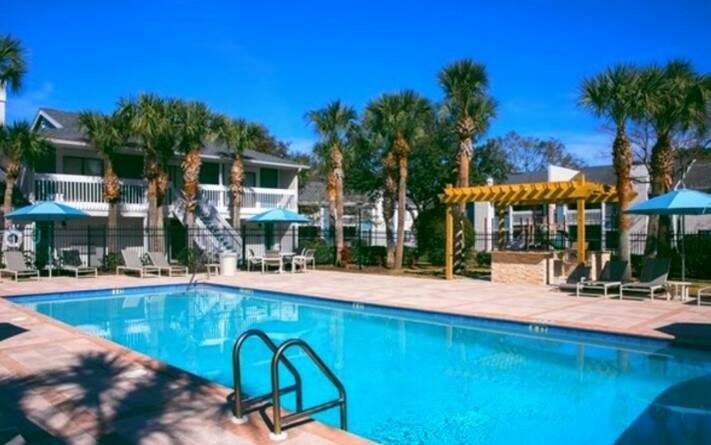
Located in Jacksonville (FL), this 200-unit garden-style complex built in the 1980s was acquired in October 2018 for approximately US$ 25 million and sold for US$ 40 million — a 60% appreciation resulting from successful actions that increased effective rents at the property by 16.7%.
The value-add carried out included efficient management of rental contracts, renovation of the tennis and beach-volleyball courts, as well as work on the interiors of the units with replacement of flooring, painting and new stainless-steel appliances. As a result, the property generated an annualized return (Net IRR) of 49%, including dividends and capital gains.
Oakwood Apartments
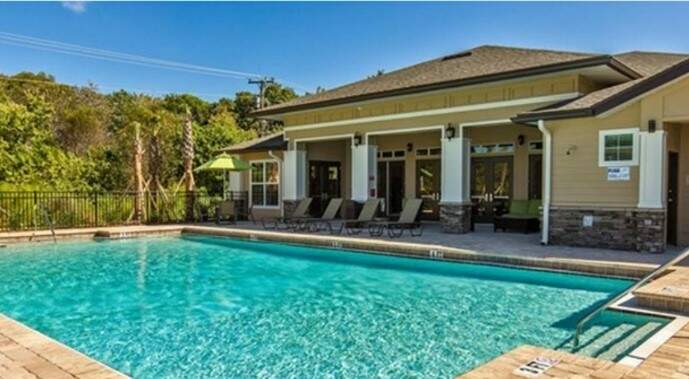
Built in 2015, this 148-unit Class B multifamily community located in Sarasota (FL) was acquired in January 2019 for US$ 19.8 million. Its appreciation strategy focused on more efficient contract management, with a reduction in the volume of discounts and concessions to tenants, as well as painting of the facade, modernization of signage and a complete upgrade of the gym.
The renovation of the units' interiors included painting, the addition of washers and dishwashers and the installation of gourmet kitchens with new appliances. Thus, over a little more than two years it was possible to increase effective rents by more than 8%, appreciating the property, which was then sold for US$ 26 million, generating an IRR of 43.3% (including rents and capital gains).
Considerations when investing using this strategy
Successfully implementing this strategy requires competence not only to identify the “hidden” potential of each asset at the time of acquisition, but also to execute the improvement program that maximizes the asset's results.
Its application requires deep knowledge, planning and daily control of activities, making it imperative to work with local specialists who deeply understand the nuances related to the type of target asset, with well-defined business plans and market experience.
Ativore has been advising clients since 2012 on investing in various U.S. real estate segments using sophisticated asset-analysis methodologies that undergo several types of stress tests and committee approval before being presented to investors, directly or via funds structured by our manager. Talk to our advisors to better understand how we can help you invest safely in this market.