
1. GDP growth
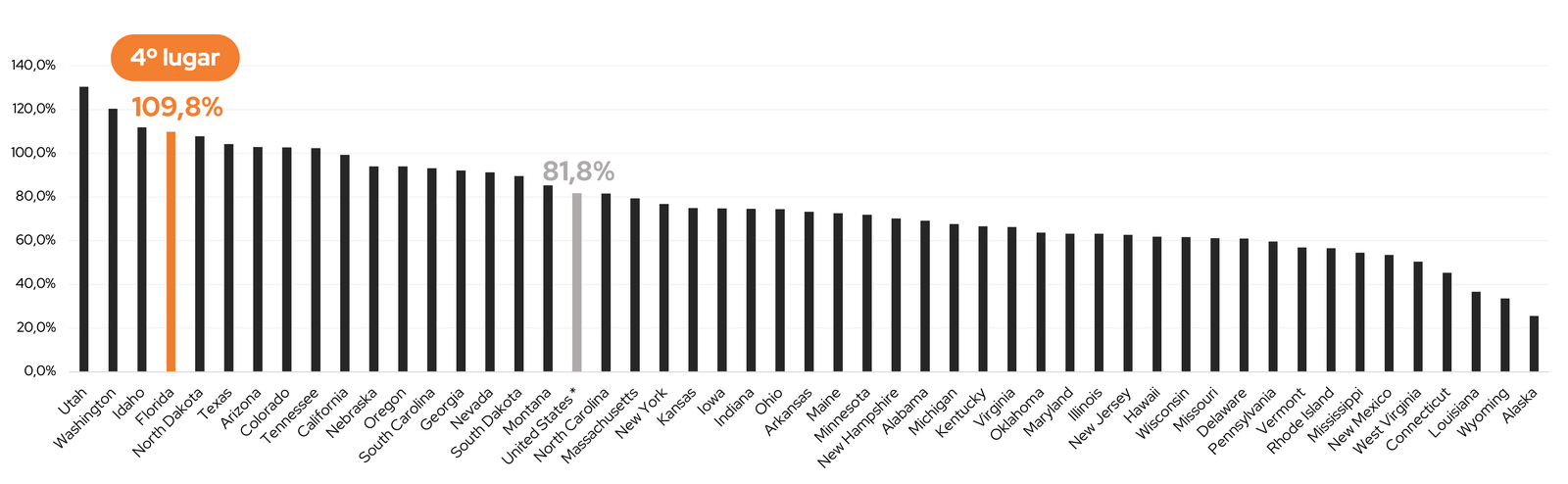
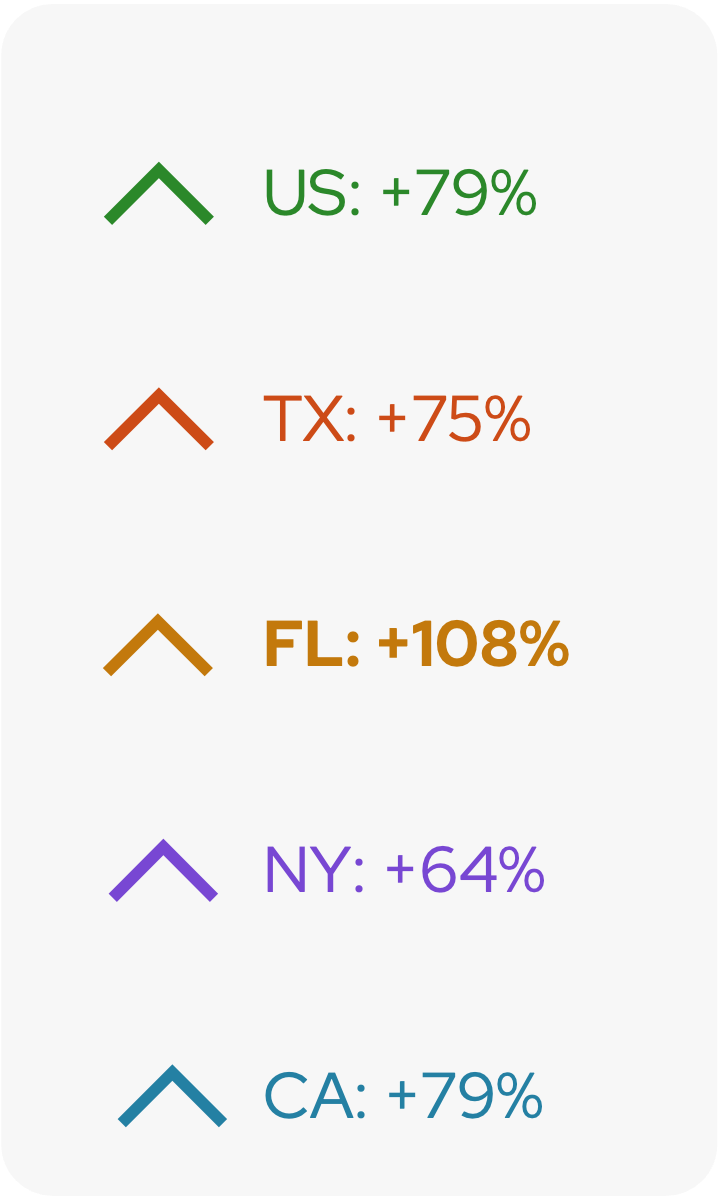
In economic terms, Florida had the fourth-largest GDP growth and was the leader among the large state economies between 2010 and 2023. Between 2010 and 2023, Florida was the state that grew the most economically among the large economies, accumulating nominal GDP growth of nearly 110%. This is growth far above the national average of 82%.
In 2023, Florida's GDP reached US$ 1.6 trillion, the fourth-largest among U.S. states. Only California, Texas and New York surpass Florida. For comparison, Brazil's GDP was approximately US$ 2.2 trillion in the same period.
2. Record tourism
Tourism in Florida has grown over time, and the state has already established itself as a major domestic and international destination. Beyond the well-known theme parks, the state's natural beauty — especially its beautiful crystal-clear beaches — attracts tourists year-round.
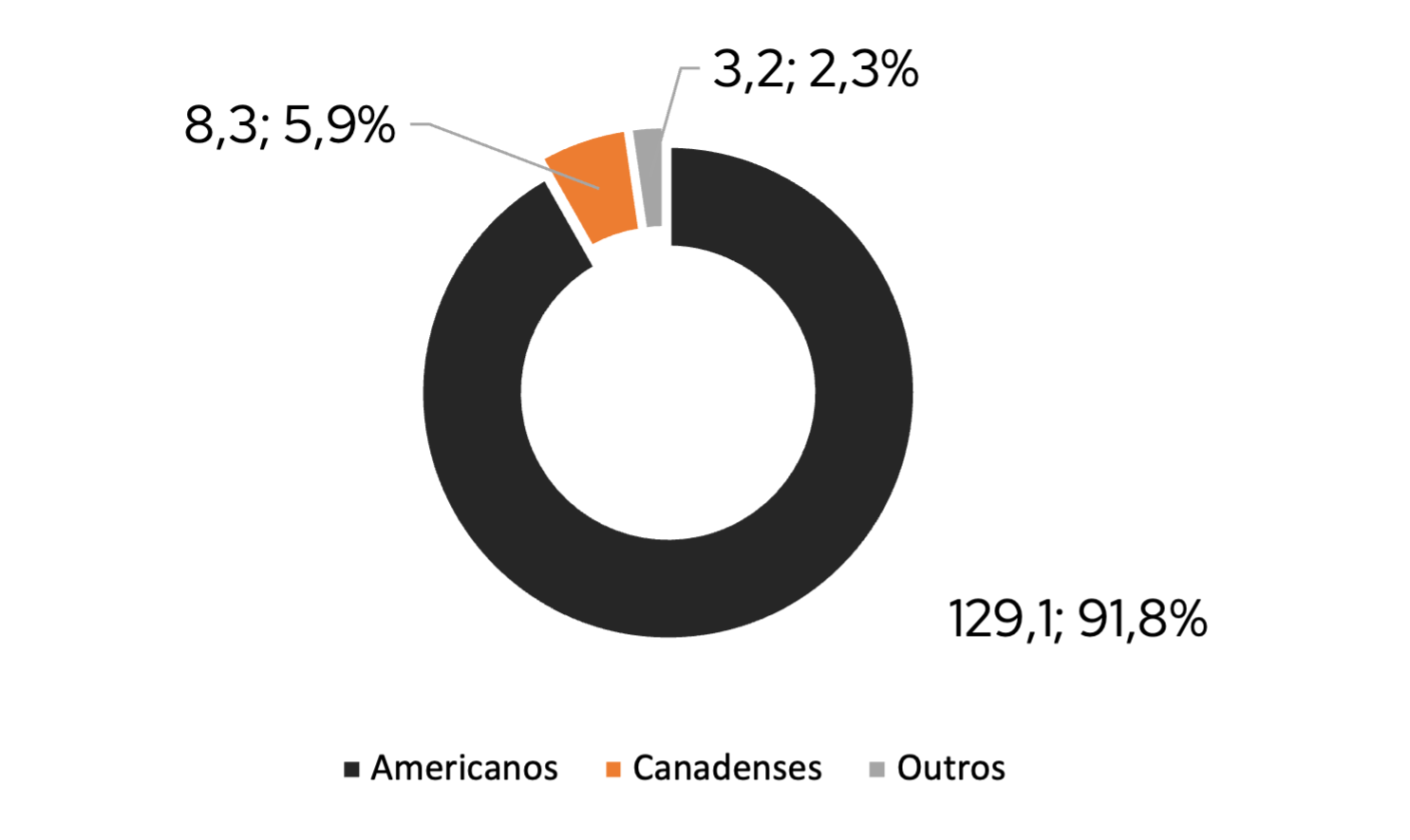
With the pandemic, in 2020, the number of tourists fell about 40% compared with the previous year. However, by 2023 the state welcomed more than 140 million tourists, growth of 7.3% relative to 2019. The state holds the national record for total number of visitors, and ranks second when considering foreign visitors alone. Americans account for almost 92% of tourists and Canadians for almost 6%.

3. Population growth
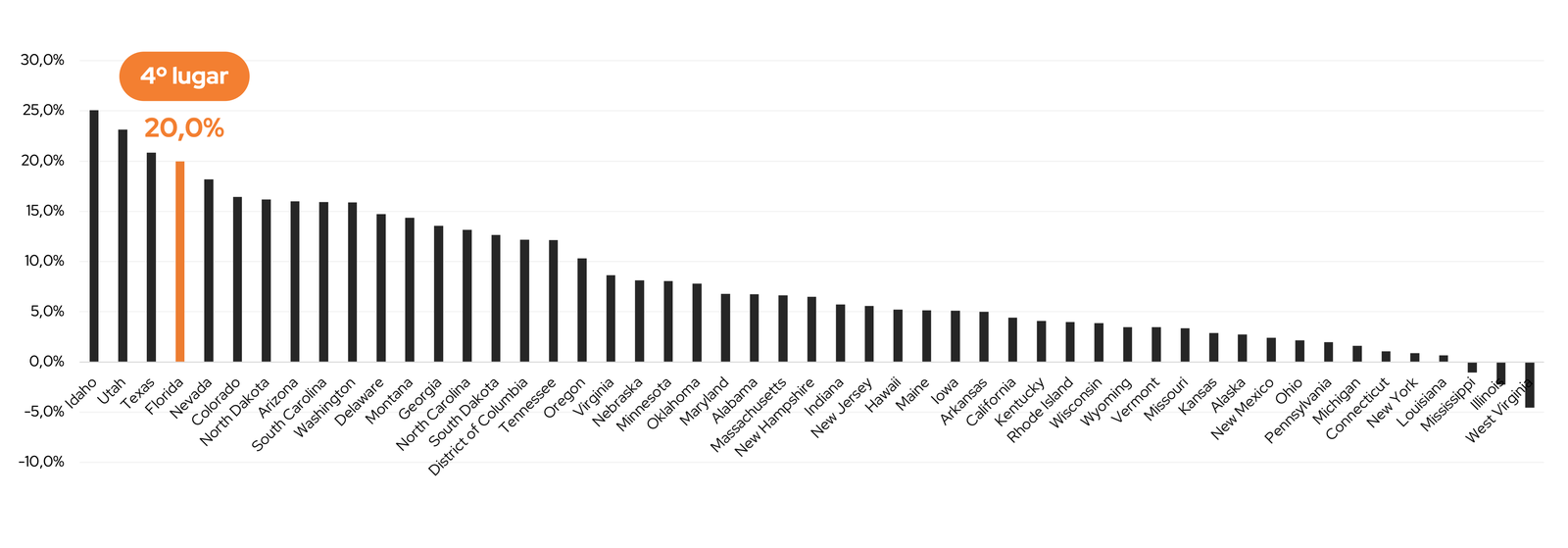
Among states with more than 10 million inhabitants, only Texas had higher population growth than Florida. Between 2010 and 2023, Florida's population grew about 20%, the fourth-largest increase among the fifty states. In 2023, the population totaled 22.6 million inhabitants, the third-largest in the country, behind California (39 million) and Texas (30.5 million).
4. Job growth
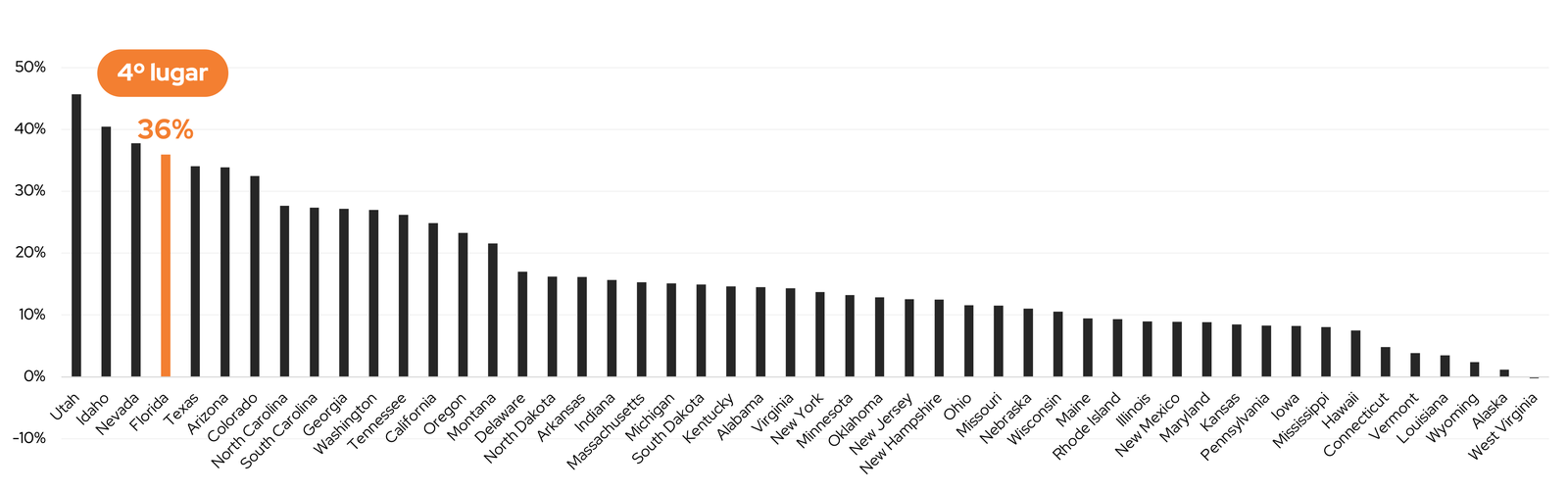
The state also performed excellently in terms of labor-market growth, with a 36% increase in the volume of jobs. Florida was the record-holding state for job creation among the largest state economies, attracting companies that generate good jobs and draw in more population, in a virtuous cycle.
5. Pro-business environment
The large consumer market and the pro-business environment have attracted companies of all sizes to Florida. The state consistently ranks among the best for doing business, thanks to low taxes, pro-business policies, a streamlined regulatory environment and competitive costs. Regulatory agencies provide faster and more predictable permitting processes. One symbol of this pro-business face is the Orange County Convention Center in Orlando, the second-largest convention center in the country.
6. Taxation favorable to businesses and individuals
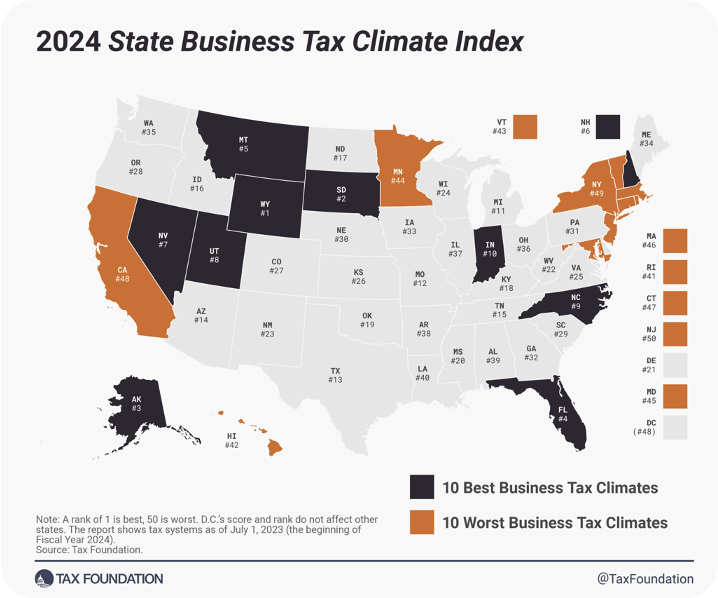
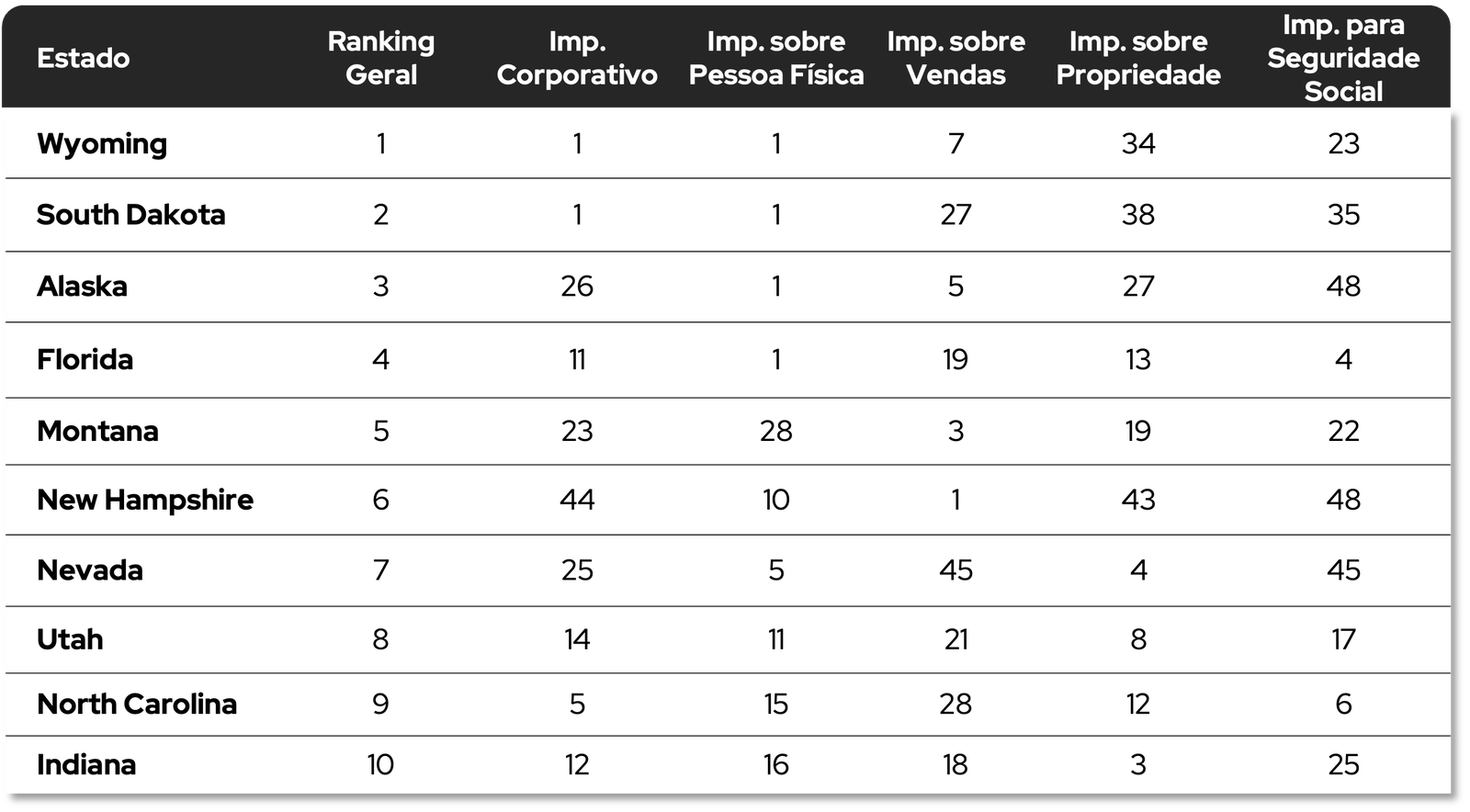
In terms of taxation, Florida was considered the fourth-best state based on an overall view that takes into account five types of taxes: corporate tax, individual income tax, sales tax, property tax and unemployment insurance tax. Among the large state economies, this is the best result, which partly explains the attraction of companies and individuals, especially those coming from high-tax states such as California (#48 of 50) and New York (#49 of 50).
7. Strong infrastructure
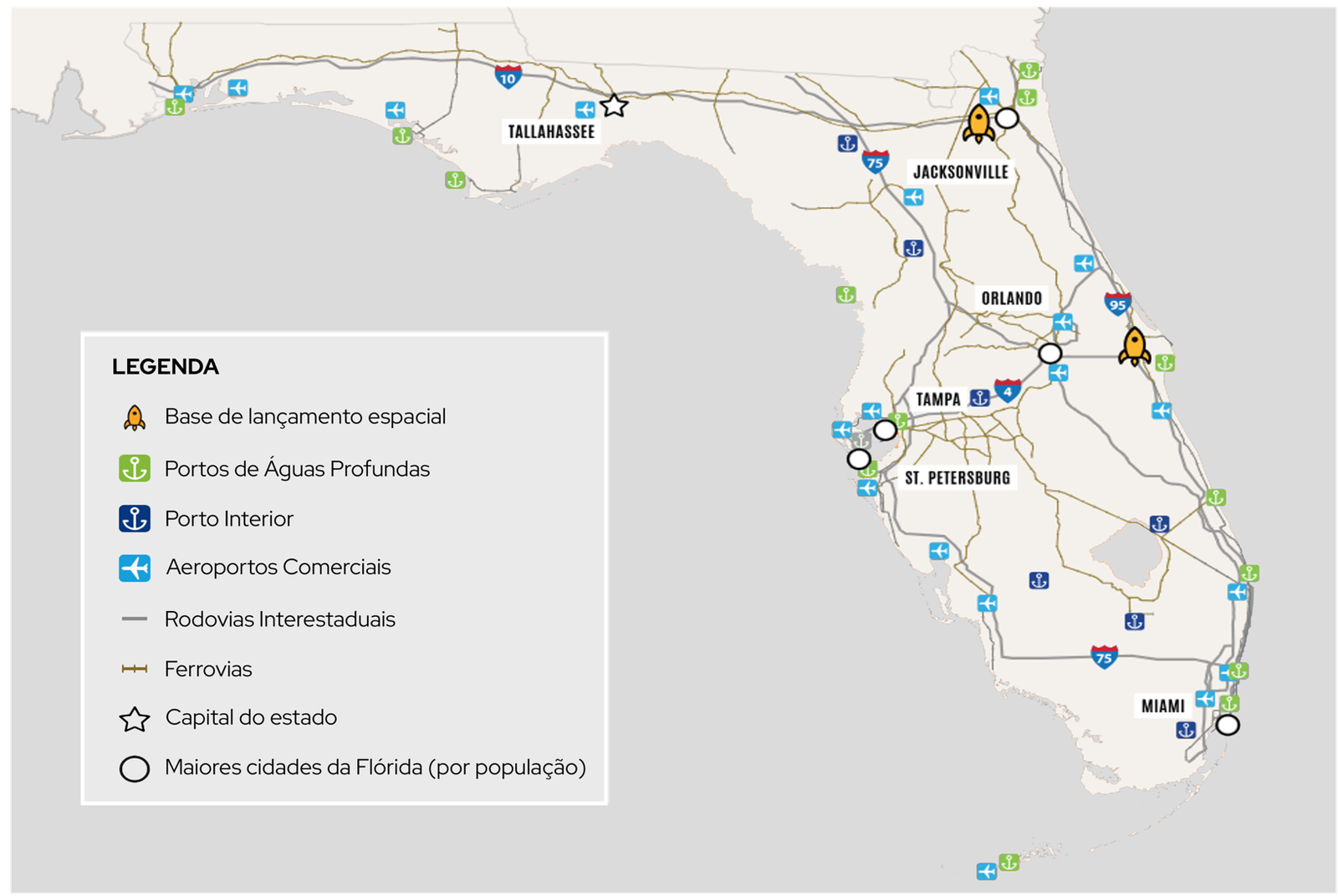
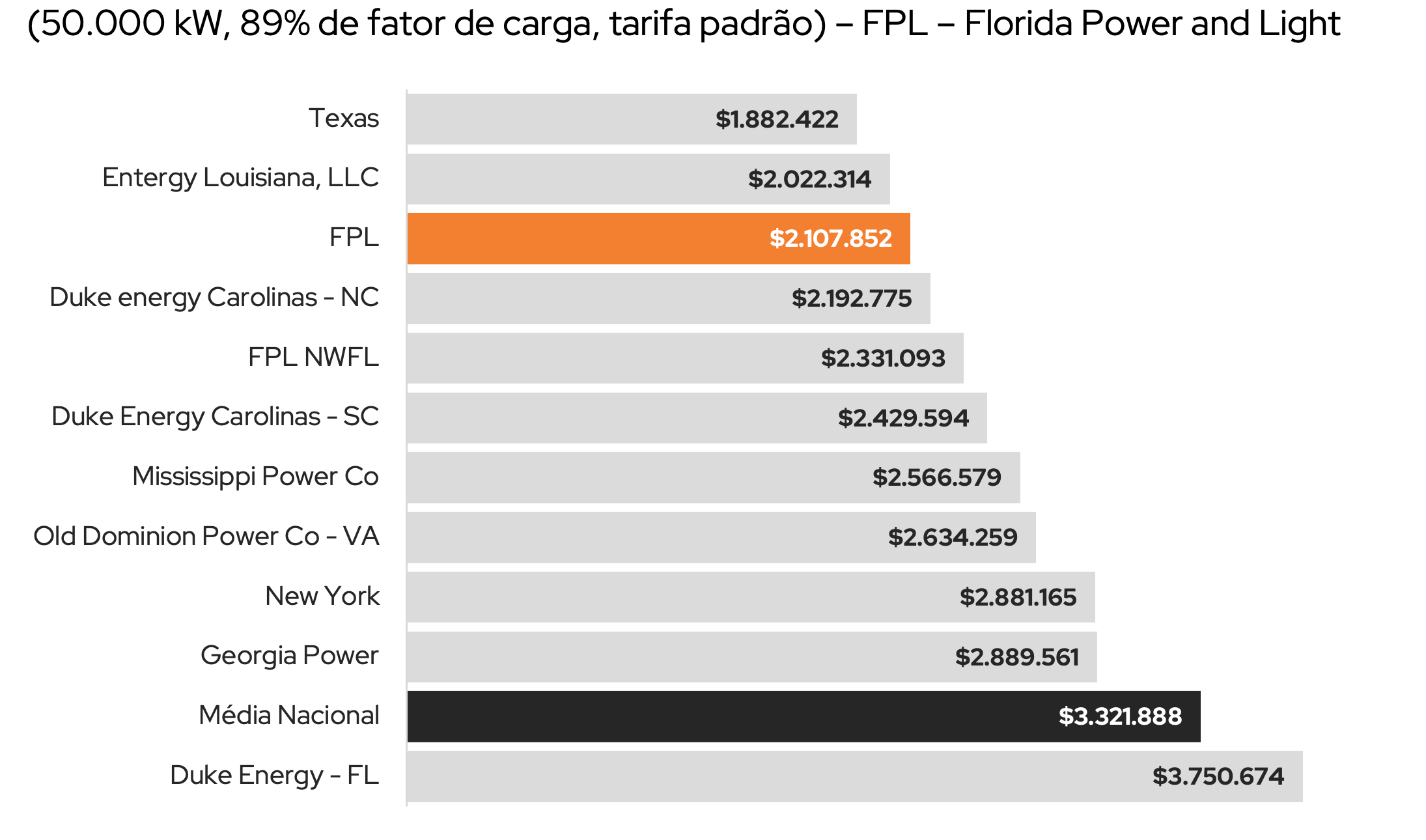
The state has also attracted many companies thanks to its strong transportation infrastructure and low energy costs. The transportation infrastructure is made up of multimodal systems — international airports, deep-water ports, high-quality highways and freight and passenger railways. In addition, Florida offers low energy costs compared with other states.
8. Major investments
The state has also stood out in megaprojects, with the expectation of consolidating itself as a tourism and business destination. Brightline, which links Miami to Orlando with high-speed trains, is one example. As a major new tourist attraction, there is the construction of the Epic Universe mega theme park, the largest park opening since 1999. Another example is the expansion of airports, such as Orlando International Airport.



9. Favorable domestic migration
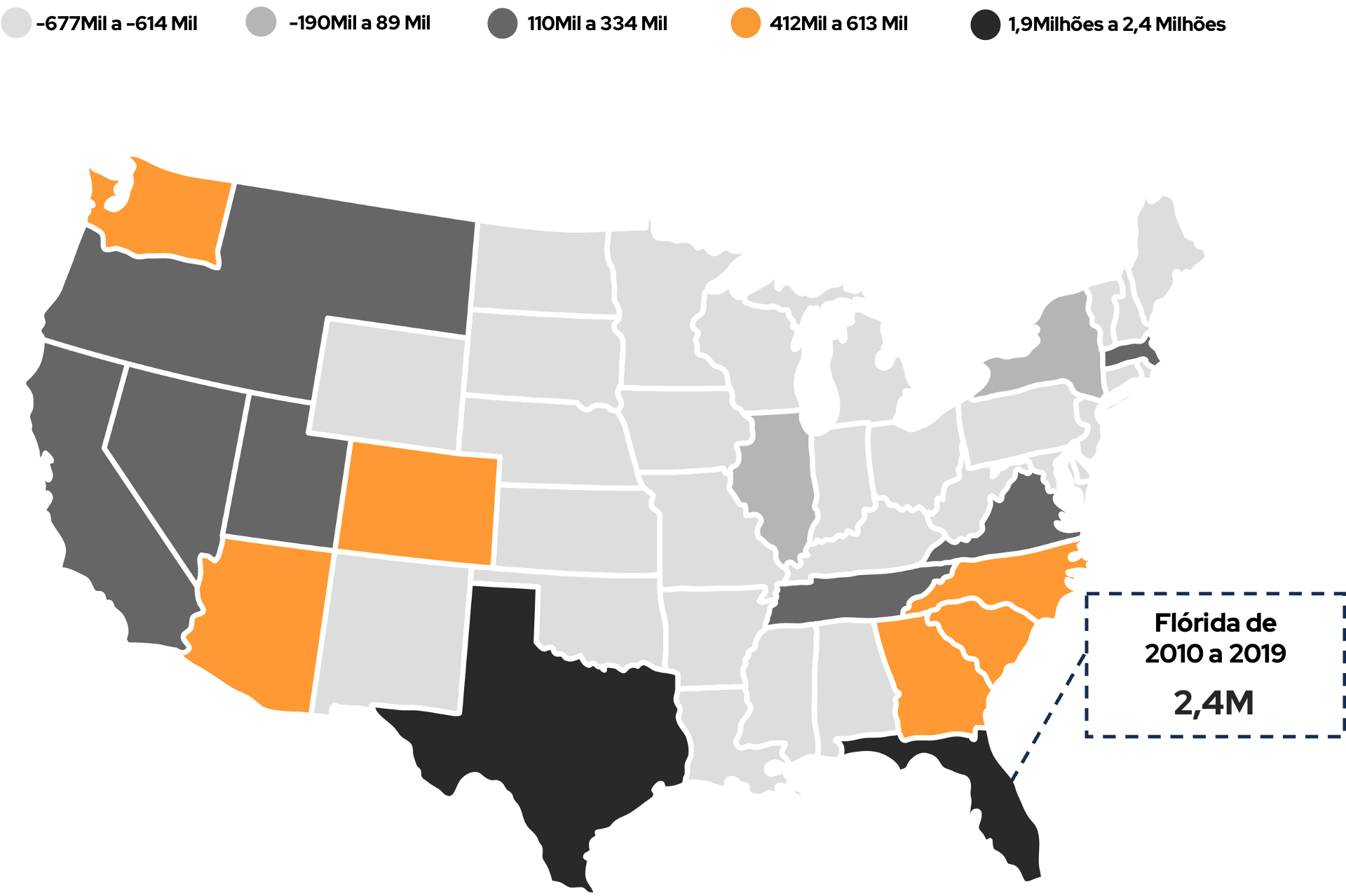
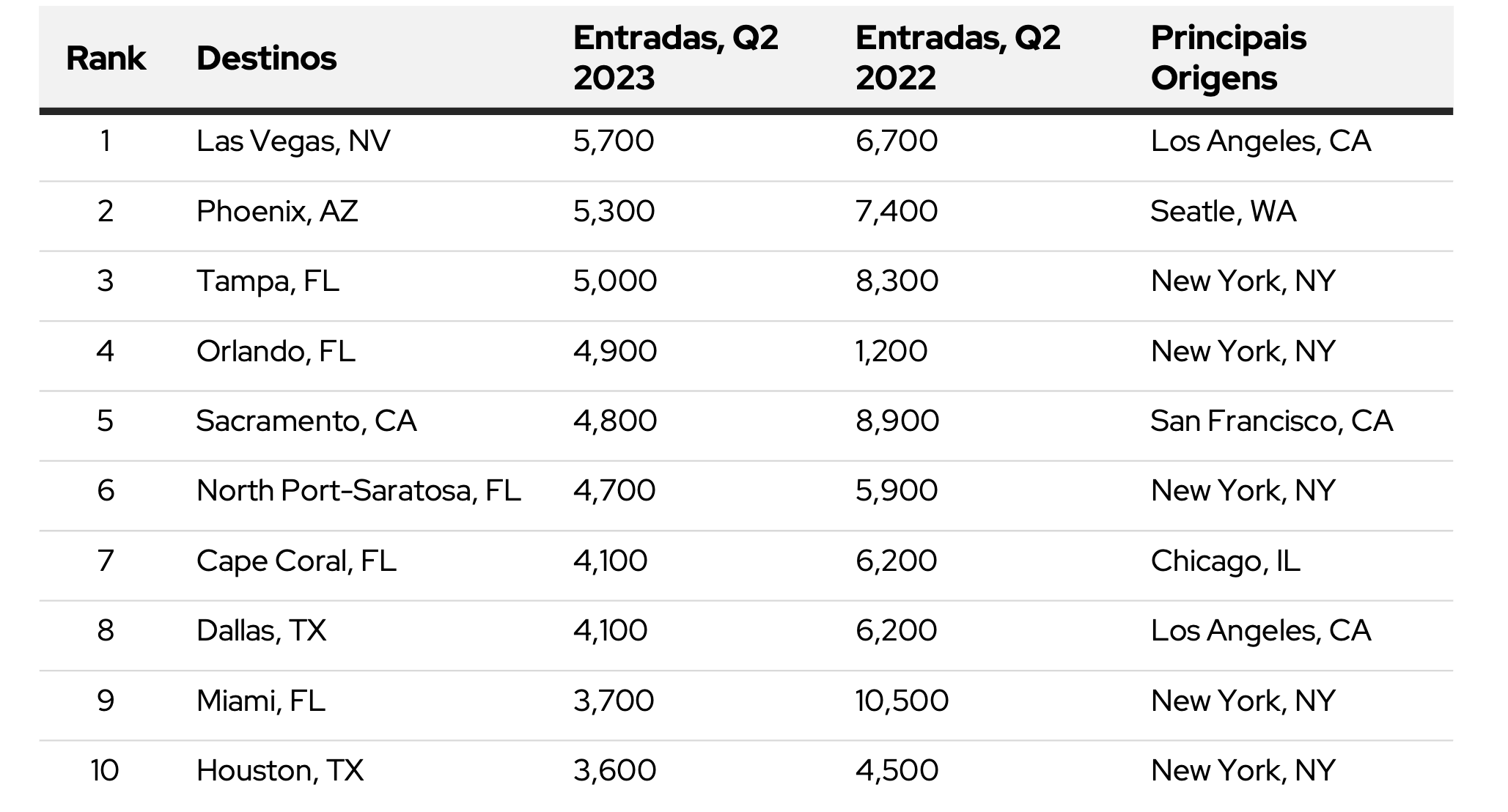
Florida set the record among all states as a migration destination. From 2010 to 2019, it received 2.4 million net migrants; Texas, in second place, received 1.9 million. In a RedFin survey, of the ten most sought-after metropolitan areas by Americans, five are in Florida: Tampa, Orlando, Sarasota, Cape Coral and Miami. Most are seeking to leave high-cost-of-living locations such as Los Angeles, San Francisco, New York, Chicago and Seattle.
10. Relatively affordable housing
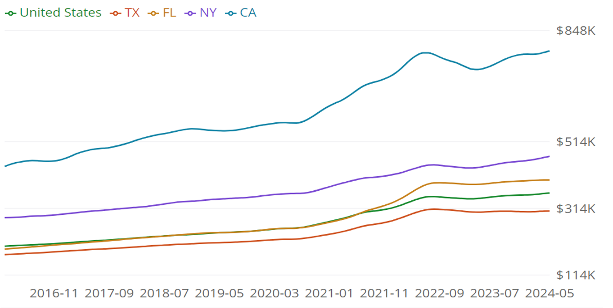
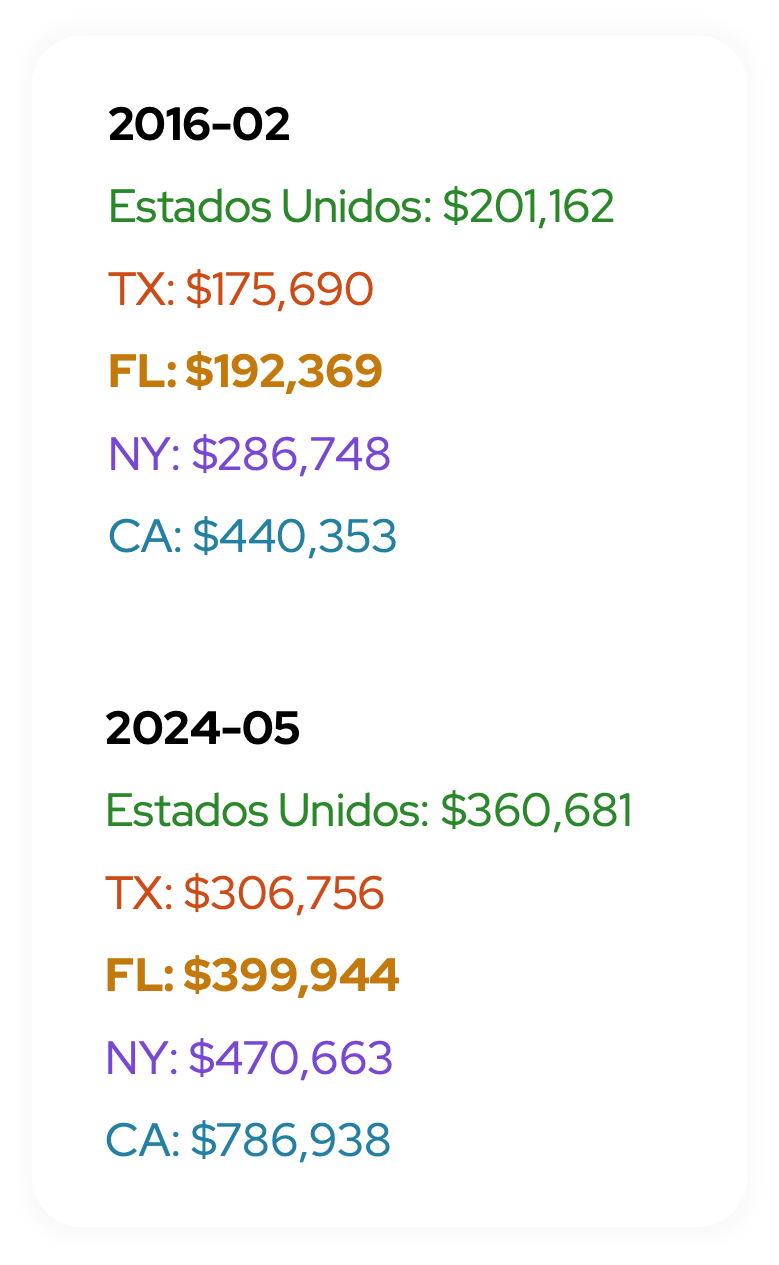
In the real estate market, this migration has contributed to rising property prices in Florida. Even so, comparatively, the state still has a much more affordable cost of housing, especially compared with California and New York. This represents a major opportunity, since it is a more structural source of demand that should persist for several years.
11. Attracting millionaires
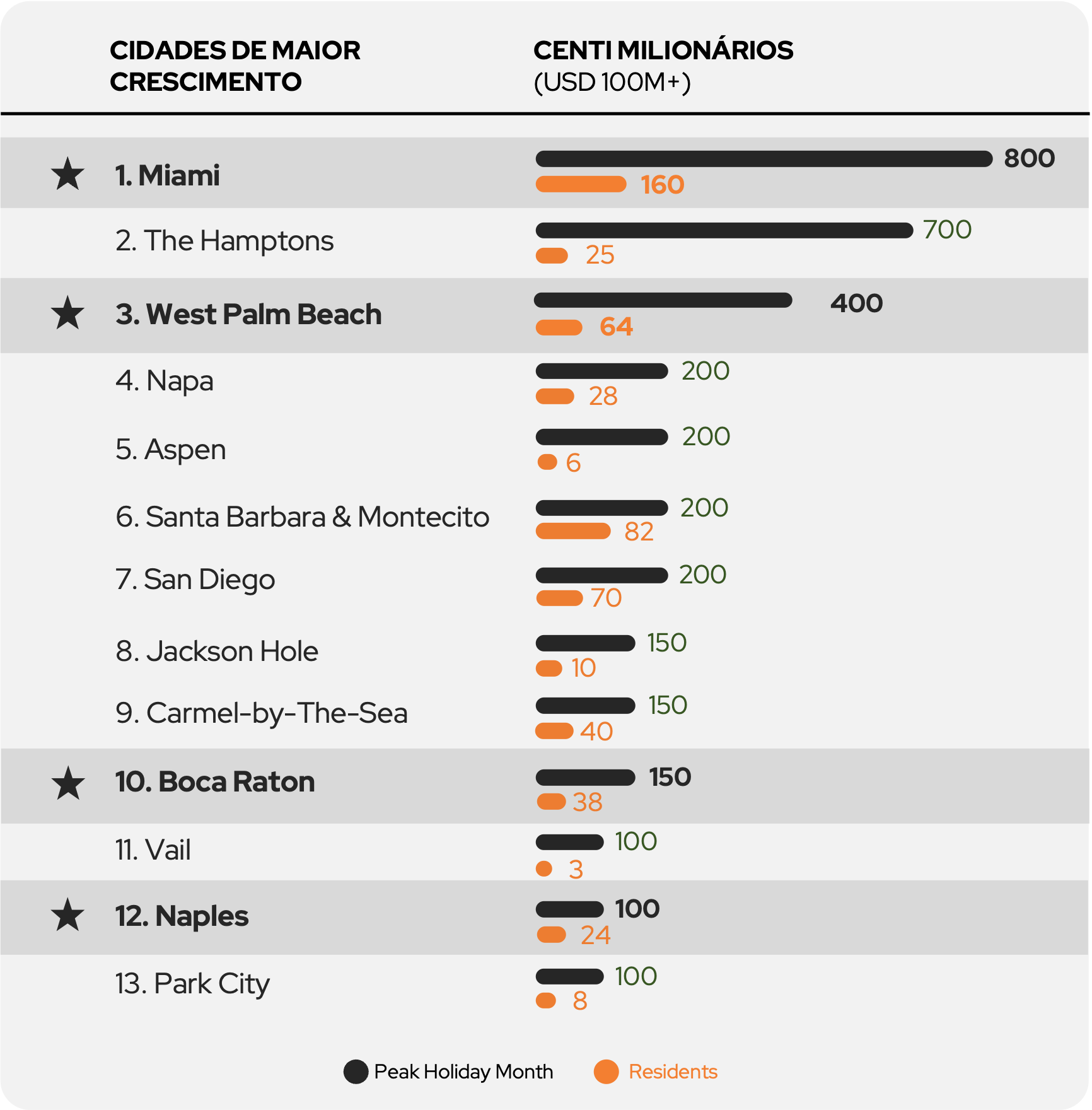
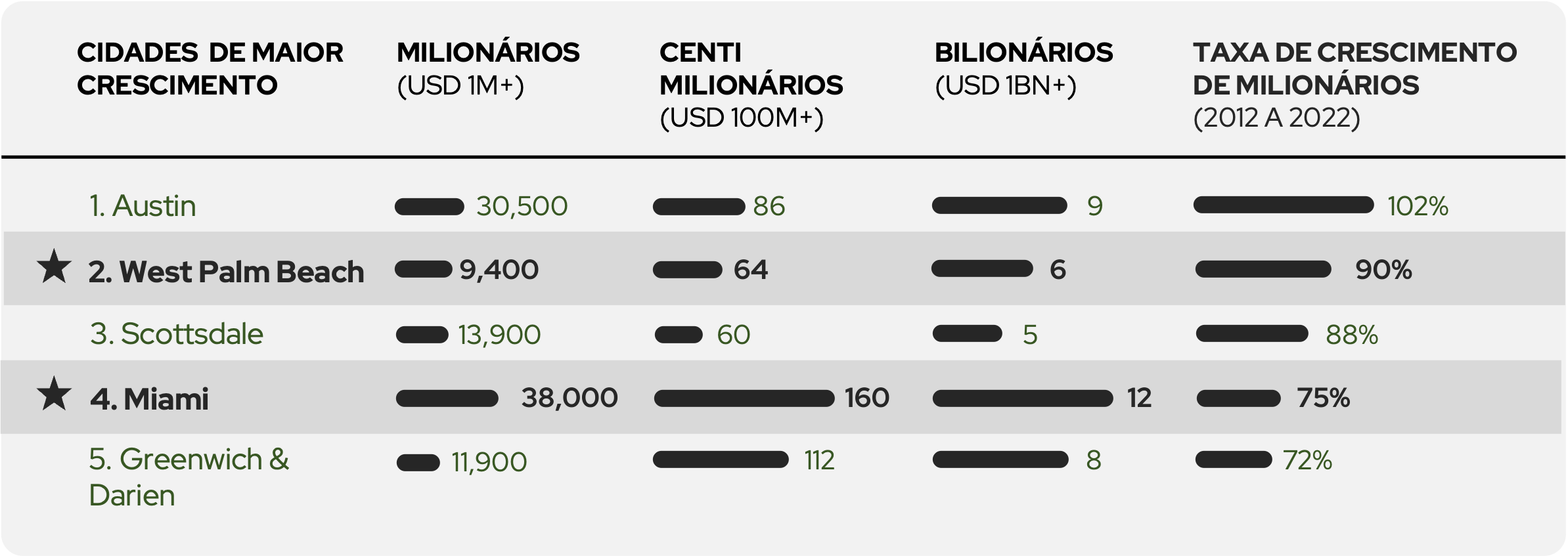
With a good business environment, a mild climate and tax advantages, Florida has been attracting not only the American middle class but also millionaires and centi-millionaires. Two of the five cities with the largest increase in the number of millionaires are in Florida: West Palm Beach and Miami. Of the thirteen vacation destinations most sought after by centi-millionaires, four are in the state: Miami, West Palm Beach, Boca Raton and Naples.
12. Boom in the luxury residential market
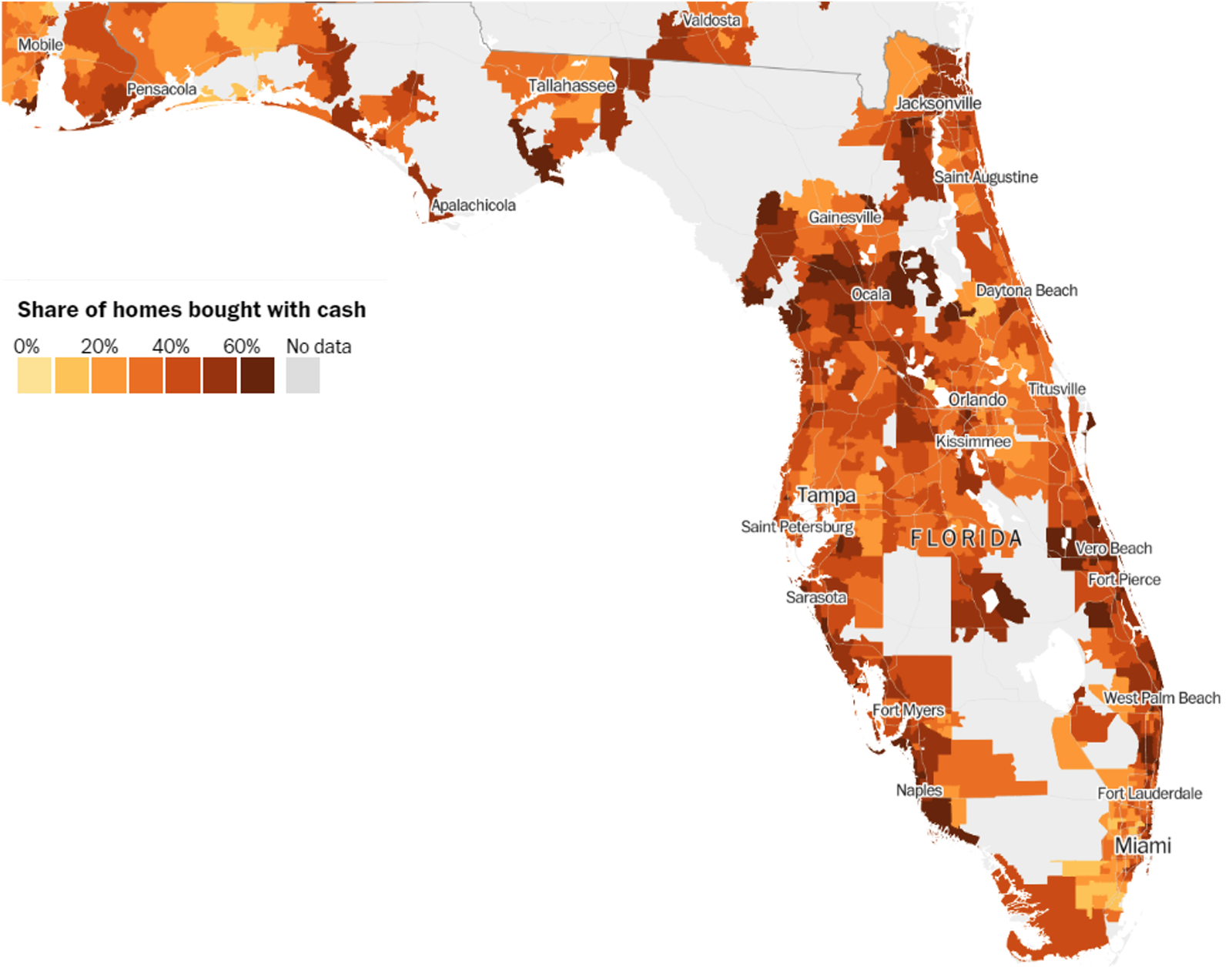
With the attraction of businesses and millionaires, some of the strongholds of this economic elite have experienced a real estate boom. West Palm Beach, Naples, Boca Raton and Miami stand out. This audience is less susceptible to fluctuations in the economic cycle and tends to acquire properties in cash (all-cash transactions), without depending on interest rates. While 2023 was a record year for all-cash transactions nationwide (about 35%), in the millionaire strongholds that percentage ranges between 60% and 90%.
13. Strength of the rental market
With the sharp rise in home prices and mortgage rates, the difference between the financing payment and the rental value (Affordability Gap) has never been greater. In Florida, markets such as Miami, Fort Lauderdale and West Palm Beach have a fairly high gap. Orlando and Jacksonville also have a high gap. The average mortgage payment is 38% higher than rent, and the difference is likely to persist given expectations for prices, interest rates and rent growth.
14. Reduction in the future supply of homes
The rise in interest rates starting in 2022 is already affecting the future supply of new homes in Florida, with an 18% drop in permits issued for new home construction in the state. With lower supply, the trend is for the real estate market to remain under pressure, since demand is likely to keep rising, whether from organic population growth or from people migrating to the state.
15. The best-ranked among the large states
For all its attributes, Florida is frequently well positioned in comprehensive state rankings, having placed 9th in 2024, the best position among the country's ten most populous states. Among the ten states with the largest population, Florida is the best-placed, rising one position relative to the 2023 ranking. Highlights include its first-place finish in the Economy ranking and in the Education ranking.