
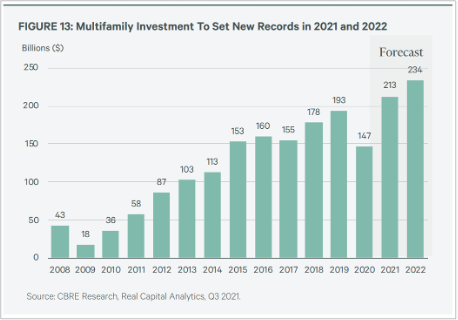
The U.S. Multifamily Property segment was one of those that gained the most prominence over the past decade, having posted high returns, low risk and growing preference among institutional investors. According to CBRE/Real Capital Analytics, investment volume in the segment is expected to reach US$ 213 billion in the U.S. in 2021, the highest among all segments and an all-time record.
Multifamily Property investments in 2021 and the forecast for 2022
At the root of this movement are structural socioeconomic trends that increase the number of renters, by necessity or by choice, at the expense of the number of homeowners. These trends — economic, social and cultural — gained importance over the past decade and, by all indications, should persist over the long term.
Economic trends that benefit the Multifamily Property segment (Multifamily Property)
In economic terms, the Millennial generation has proportionally lower income than the previous Baby Boomer generation. It is also a more indebted generation that, because of student debt, often begins its adult professional life with negative net worth and quite limited access to credit. It is therefore a generation that is less able to acquire a home of its own and, out of necessity, lives in rented apartments.
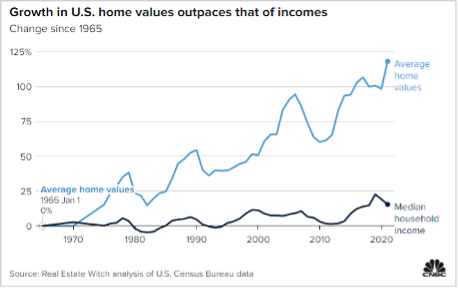
In addition, property prices have, in general, risen proportionally more than the population's income, making acquisition more difficult. This rise is related to the low supply of new properties, especially in the more affordable segment. Low supply, in turn, is explained by low productivity gains in the construction sector, growing land scarcity, regulatory and zoning restrictions, construction cost inflation and demand pressure, especially in large urban centers.
U.S. Home Value Growth Outpaces Income Growth
Social trends that benefit the Multifamily Property segment (Multifamily Property)
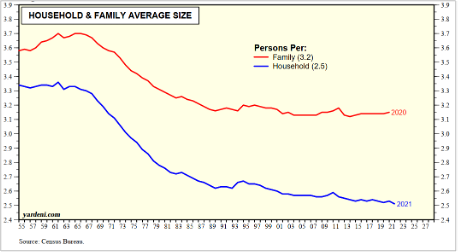
In social terms, many young people are taking longer to marry or choosing not to start families, delaying the acquisition of a home of their own. The number of divorces has also been growing, which frequently culminates in the abandonment of a larger, shared home and a move to smaller rented apartments. These new behaviors are confirmed by the consistent decline in the average number of occupants per home (Household Average Size), which puts pressure on both the demand for housing in general and the demand for rental apartments.
Average Family Size* and Number of Household Occupants** at Historic Lows
Cultural trends that benefit the Multifamily Property segment (Multifamily Property)
To complete the picture, culturally there has been a major shift in mindset among much of the population. On one hand, renting a property has come to be seen as an option that facilitates geographic mobility, important in the pursuit of better jobs and a higher quality of life. On the other, a growing number of young people do not want to commit to the long-term debt typical of a mortgage.
Considering these macro trends, the inflation protection typical of this segment and the simple fact that people continue to need a place to live, regardless of economic cycles, it can be concluded with some confidence that the Multifamily Property segment should remain strong over the long term, both in consumers' preference and in investors' preference.