
Investing in dollars, risk diversification and attractive returns
The days of investment portfolios consisting solely of stocks and fixed-income securities are coming to an end. There is strong evidence that allocating portfolios exclusively to these traditional assets does not offer the necessary diversification or the long-term returns sought by investors in the current macroeconomic context.
Interest rates are likely to remain low for a long time, which will leave many investors with inadequate returns and disillusioned with traditional asset classes. In Japan, the interest rate is already negative, while in the U.S. and Brazil it is at historic lows. Although not yet nominally negative in either country, we are very close to negative real returns once inflation is taken into account.
Private alternative investments can offer higher returns and risk diversification that do not exist in the world of traditional investments. These markets - which include private equity, real estate, infrastructure and private debt - have grown at a compound annual rate of 9% since 2008¹ driven mainly by institutional investors, high net worth individuals (HNWIs) and ultra-high net worth individuals (UHNWIs).
Because private alternative assets are generally not "marked to market," they tend to be less volatile than stocks and are more resilient to crises. An additional advantage of alternative investments backed by real assets, such as real estate (Real Estate Funds, Real Estate Private Equity, etc.), is that they can act as a hedge in the event of an economic slowdown, since their prices generally fluctuate inversely to interest rates. U.S. mortgage rates reached a low of 2.8% per year post-Covid, boosting demand and substantially increasing returns for investors in certain types of properties.
These data are corroborated by the results of the consolidated portfolios of Ativore's clients, composed of Private Real Estate Funds in the U.S. (Real Estate Private Equity), an investment modality in which operators (professional investors) aggregate capital from several passive investors to acquire, or provide private financing to, specific properties or small portfolios of income-generating properties that generate income in dollars.
Although interest in this space is growing rapidly and the sector itself is constantly evolving, investors should be aware of the often complex nature and hidden risks associated with alternative investments.
Therefore, it is important to perform due diligence to determine whether the investment strategy can be implemented, as well as whether the infrastructure needed to manage such investments is in place. This can be more challenging than in the case of traditional investments, especially due to the more specific risk and return profiles of these assets, not to mention the lower transparency, liquidity and efficiency of the associated markets.
Given these difficulties, the best alternative-investment opportunities abroad have historically been concentrated in the treasuries of major banks or family offices, restricting access for individual investors. The emergence of specialized investment platforms, such as Ativore's, has made these alternative asset classes more accessible to the high-income Brazilian investor.
Ativore alternative-investment platform
Founded in 2012 to meet the growing interest of the private segment in alternative assets abroad with attractive risk-return profiles and returns in dollars, Ativore Private Investments provides complete advisory services to the investor, with a focus on Private Real Estate Funds (or Real Estate Private Equity) in the U.S.
Our clients have access to a continuous flow of private real estate products, many of them off-market, rigorously selected by our teams of analysts, to build their personalized portfolios of Private Real Estate Funds in the U.S., with an emphasis on generating dividends in dollars.
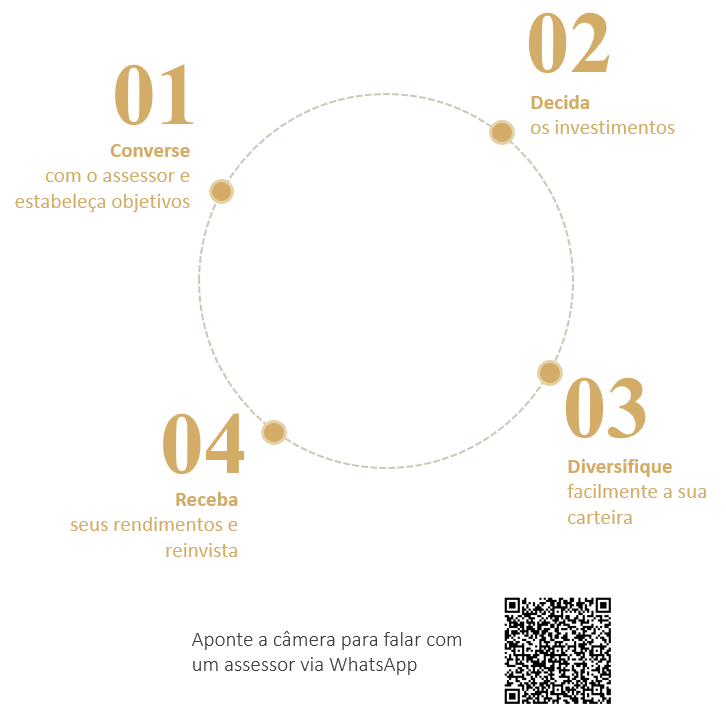
How Ativore's offshore alternative-investment platform works
¹ BCG Global Asset Management Report 2020