
In recent years, with the growth of e-commerce — a phenomenon heightened by the pandemic — there has been much talk in the press about the end of traditional retail, even coining the term “retail apocalypse.” While the impact of online commerce on brick-and-mortar retail is undeniable, what we actually see is a heterogeneous effect within this real estate segment, with certain types of retail and certain cities being more affected than others.
From an investment standpoint, this opened up significant opportunities to acquire assets at a discount, precisely because of a risk perception that is often misaligned with the reality of the businesses — properties with healthy tenants, long leases and stable cash flow at quite attractive prices. This, of course, assuming a careful selection of assets, in resilient markets, operated by specialists in the segment.
The retail market and its nuances
The U.S. retail market is enormous and was valued, in 2020, the year of the pandemic, at US$ 5.57 trillion, according to data from the US Census Bureau. This figure surpasses the 2019 level of US$ 5.40 trillion and shows that, even in a turbulent year, the sector grew.
This is typically a market segmented into various types of stores, each geared toward a specific shopping occasion and consumer profile. Thus, there are the “Malls,” our traditional shopping centers; the “Outlets,” usually featuring discounted brand-name apparel; the “Power Centers,” where several large anchor stores (Walmart, Home Depot, Best Buy, etc.) cluster to serve a large region; and the “Community Centers,” also known as “Strip Malls.”
Strip Malls, as the name suggests, are “in-line shopping centers,” with storefronts facing outward, no covered corridors and parking in front of the stores, located along roads with heavy car traffic. In the United States, which has a quite unique urbanization model with enormous residential suburbs, Strip Malls are considered neighborhood retail — the closest and most convenient option for everyday shopping and services.
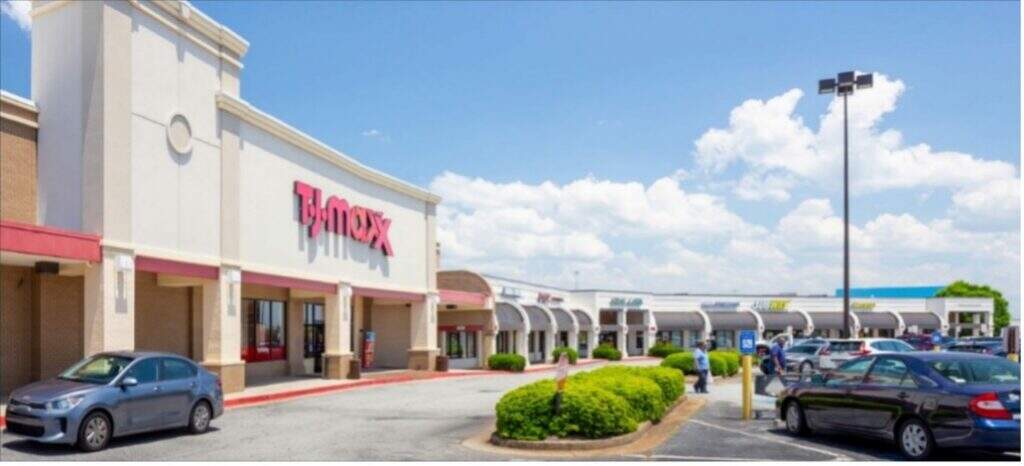
It is therefore important to note that, although physical retail is undergoing disruption due to e-commerce, which grew 35% in 2020 in the U.S., the main segments affected are those most easily replaced by online commerce: large Malls (typically focused on department stores, home goods, electronics and apparel), Outlets and Power Centers. Strip Malls, in turn, suffered a much smaller impact because they:
- concentrate tenants focused on food and services;
- have national and regional store chains among their main retailers, especially discount stores; and
- position themselves as a convenient option, close to customers' homes.
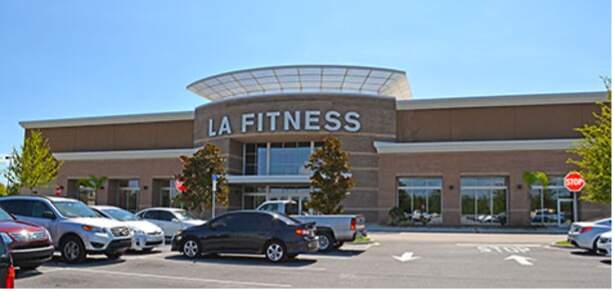
In this sense, Strip Malls have traditionally focused on services and convenience, on tenants such as gyms, clinics, restaurants, beauty salons and supermarkets. Regarding this last item, although many consumers have already adopted e-commerce for their grocery shopping, many others still prefer to buy food in physical stores, and even those who already shop online end up being supplied by the same local supermarket, since delivery speed and food freshness are important factors.
A similar phenomenon, driven by the pandemic, was the transformation of these neighborhood retailers into small “last mile” distribution centers for online commerce itself, taking advantage of their space, proximity to consumers and positioning along major local highways. In this way, even amid fiercer competition, Strip Malls have proven to be one of the most resilient retail formats in the U.S.
Resilience of the physical retail segment and the post-pandemic recovery
After a period of closed stores and weak sales at the start of the pandemic, there was a strong recovery in physical retail, especially in Strip Malls. With the completion of mass vaccination in the U.S. in 2021, consumers gradually returned to restaurants and physical stores as the population's confidence in frequenting public places was reestablished.
Another important point is that the pandemic forced people to save, leaving them with surplus funds to spend on retail. Both effects increased traffic at shopping centers, which benefited both tenants and owners.
With rising inflation, consumer spending is likely to slow. However, the expectation is that Strip Malls will still be resilient thanks to their focus on essential items, everyday services and the convenience they offer.
This has been borne out by several metrics compiled by Green Street, an important source of information for the sector:
- Since mid-2021, foot traffic at strip malls has been at levels equivalent to pre-pandemic levels.
- In Q1 2022, the volume of tenant lease renewals has been at elevated levels, with the dynamics shifting marginally in favor of the owner.
- There is a low level of new strip mall supply on the market, which, combined with the enhanced logistical role of physical stores, are the main tailwinds increasing the bargaining power of strip mall owners.
- In the 12 months through June 2022, retail sales were practically flat compared to the same period the previous year, after adjusting for inflation (sales rose 8.4% vs. CPI of 9.1%). This is a sign of retail's resilience, especially considering the strong prior increase, of 18.5% in 2021 over 2020.
- Notably, this 18.5% growth in physical retail sales outpaced that of e-commerce over the same period, which stood at 14.2%.
Investment opportunity in strip malls
In general, the uncertainties brought by the pandemic spurred the sale of some assets at discounted prices due to various factors, such as:
- the need to liquidate assets to generate cash;
- management difficulties on the part of operators less prepared for a crisis scenario;
- challenges in managing debt payments and the possibility of collateral being foreclosed on by financing agents;
- portfolio adjustments stemming from top-down decisions to reduce exposure to retail properties in the portfolio, especially on the part of large non-specialized institutional investors, often influenced by a negative image in the press that does not necessarily reflect the reality of each business.
However, after a period of initial turbulence, the vast majority of Strip Malls returned to normal in the U.S., with new lease agreements and stable cash flow, especially in growing regions and in regions that reopened their economies more quickly. In addition, several property managers adapted better to the online sales scenario, with more tenants adopting omnichannel sales models and a greater focus on essential, strictly in-person services related to the consumer experience.
On the other hand, several investors began to focus their investment portfolios more on multifamily and industrial properties, seen as more defensive after the pandemic. In particular, large institutional investors — generally non-specialized and with little ability to distinguish assets heavily affected from those little or not at all affected by e-commerce — reinforced selling pressure in the retail real estate market. This situation created several investment opportunities in the retail segment, especially in Strip Malls, since you have, on one hand, stable cash flows from long leases with good tenants and, on the other, relatively lower prices for these assets — a combination that offers more attractive returns with controlled risk.
Given the opportunities emerging for specialized operators, the strategy for evaluating and selecting assets for investment needs to be quite careful. In this regard, two highly relevant factors carry weight: the submarket in which the property is located and the tenant mix, both discussed below.
Submarket and tenant mix
As in any segment of the real estate sector, the location of Strip Malls is an important factor in selecting opportunities, and priority should be given to densely populated markets with higher-income populations or those experiencing strong population and job growth. These are considered more resilient and, therefore, the last to suffer from any shocks. Despite the proliferation of online shopping and e-commerce, neighborhood shopping centers remain vital components of their communities.
As for the tenant mix, priority should be given to anchor tenants belonging to national and regional chains, over local businesses, which are typically less professionalized and have less access to capital. The pursuit of tenants from large chains is also motivated by the rent-payment guarantees provided by the parent companies, which are publicly traded and whose financial situation is well known. Finding tenants that provide in-person services that cannot be offered online is also key to success, ensuring low competition with e-commerce. Finally, it is also advisable that the largest tenant not represent too large a share of revenue and that leases mature on different dates, so that the eventual departure of any one of them is easier to absorb.
Conclusion
Despite competition from online retail and the initial impact of the pandemic, the vast majority of Strip Malls remain healthy and attractive to consumers. On the other hand, the flight of some investors from this market has driven asset prices down, creating good acquisition opportunities. Thus, investing in this type of property, accompanied by robust due diligence, can deliver good, stable cash flow to the investor, backed by the credit of some of the largest retail companies in the U.S. These leases usually have escalation clauses tied to inflation and/or to store sales results, which, indirectly, also tend to grow as prices rise. In other words, when selected correctly, these assets offer stable cash flow, controlled risk and inflation protection — quite attractive attributes for the current period of instability.