
On February 21, we held Ativore's annual conference on the U.S. real estate market, with the presence of Ativore Global's founding partners – Pedro Barreto and Roberto Nishikawa – and the CEO of JSB Capital Group, Jay Lobell; the CEO of Parkview Financial, Paul Rahimian; and the CEO of Baseline Property Group, Brock Nicholas, who are specialists and investors in the U.S. real estate market with decades of experience in this market.
The event consisted of four cycles of talks and a panel with audience participation in which questions were posed to the speakers about the current macroeconomic landscape and private real estate investment opportunities in the United States.
In this article, I share the 5 crucial points learned at this event.
Enjoy the read!
1. The current macroeconomic landscape creates unique opportunities in U.S. real estate for the next two years.
Property prices are adjusting to high interest rates, having fallen 22% since the 2022 peak. With the start of the easing period in the Fed's monetary policy expected for 2024 ("dovish pivot"), prices are likely reaching stabilization at their lowest levels and beginning to recover in late 2025. Investments made at phases equivalent to the current one in previous cycles generated exceptional returns.
2. The build-to-rent segment remains a major opportunity due to the housing deficit, which will be aggravated by strong demographic fundamentals and a reduction in new construction projects owing to rising interest rates
The Fed's "dovish pivot" should lead to a reduction in interest rates over the next two years, when construction projects started in 2024 will be completed, then benefiting from higher spreads and capital gains from cap rate compression.
After construction and stabilization, in 2–3 years, the construction loan is replaced by long-term mortgage financing (10+ years). Projects with construction starting in 2023/25 will be completed after 2026, when interest rates are expected to be much lower and property prices will already have begun to rise, enabling the lock-up of mortgage loans at attractive rates and potential capital gains generated by cap rate compression after 2026. Of course, alpha generation via construction presupposes that the market is structurally robust and does not have an oversupply of properties.
In the current window, build-to-rent properties whose construction begins in 2024 will be delivered in 2026, at which point supply will be low, with less competition. In addition, it is also expected that, from 2026 onward, interest rates will also be lower, with property appreciation and reduced financing costs.
3. The real estate credit market can be well explored due to low supply from banks and high interest rates, generating good cash flows.
Although there is a reduction in credit origination due to the stricter standards adopted by banks, this trend contrasts with strong demand for credit, driven by the need to refinance debt maturing over the next two years. Stricter regulatory rules and higher loan-loss reserve requirements are forcing financial institutions such as banks to hold more capital and to grant fewer loans. Thus, the imminent maturity of real estate market debt offers an opportunity for non-bank lenders to fill this gap.
It is worth remembering that investing in credit origination should generate good risk-adjusted returns over the next two years, when interest rates will still be relatively high. The caution, in this type of strategy, is with the increase in defaults. To mitigate risks in these operations, which are complex, it is essential to carry out these investments with partners who have strong expertise in analyzing and monitoring projects, as well as the capacity to take over the assets, if necessary, and liquidate them at a profit.
4. Opportunities in (niche) segments with strong structural fundamentals, such as needs-based retail and properties geared toward the ultra-high-income audience.
In addition to the strategies derived from interest-rate movements, there are segments that benefit from more structural, long-term fundamentals. Three of these segments are residential, service-oriented strip malls and the high-luxury segment.
Residential
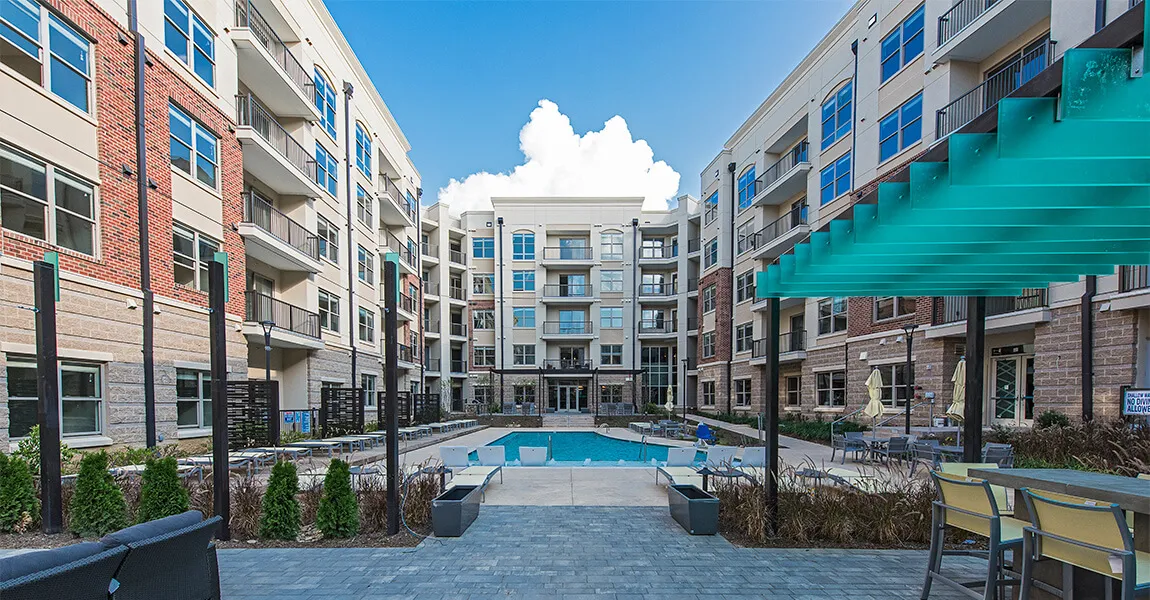
In the U.S., it is estimated that there is a deficit of 3.2 million homes and an additional need for 15 million housing units over the next decade due to demographic and obsolescence factors. Monetary tightening and the consequent increase in financing costs for those acquiring new homes led to a 23% drop in permits for new construction projects, with an expected slowdown in property deliveries in the 2025–2027 cycle, exacerbating the future residential deficit. However, if, on one hand, demand for property acquisition is depressed by the rising cost of financing, on the other, demand for leasing tends to increase. Another advantage of build-to-rent strategies is that they make it possible to choose a better moment to sell the property, which, once completed, can be kept in the portfolio for a few more years.
Strip malls

The opportunity in the retail segment arises from a negative image among many investors ("bad press"), scarcity of supply and increased consumer spending. In this segment, especially attractive are properties whose tenants do not compete with e-commerce (gyms, doctors, hair salons and services, in general) and also those that have adapted their operations to be complementary to online retail (cross-selling, consumer experience, logistics function, convenience, etc.).
Luxury

Another segment greatly highlighted by the speakers was properties geared toward ultra-high income, including retail, residential and hospitality. In these cases, the consumer, who practically does not depend on financing for property acquisition, is less susceptible to market volatility and is willing to pay a premium for location and exclusivity. In addition, growth of 57% in High Net Worth Individuals (HNWI) and 28% in Ultra-high Net Worth Individuals (UHNWI) is projected through 2027.
5. Opportunistic investments in unique assets with a clear differentiator (trophy assets)
At the conference, investment opportunities were also presented in assets considered unique, with very clear differentiators relative to the competition. These assets, often known as Trophy Assets, draw attention by standing out in their markets, whether for their location, their unique attributes, the exclusivity they offer their users or, frequently, a combination of these and other factors. They are assets that have a clear story and that would be very difficult to replicate. For this reason, they are also assets sought after by institutional investors focused on the very long term and on preserving capital across generations, who are willing to pay a premium at the time of sale. Thus, for investors, they are assets capable of generating above-market-average returns.